
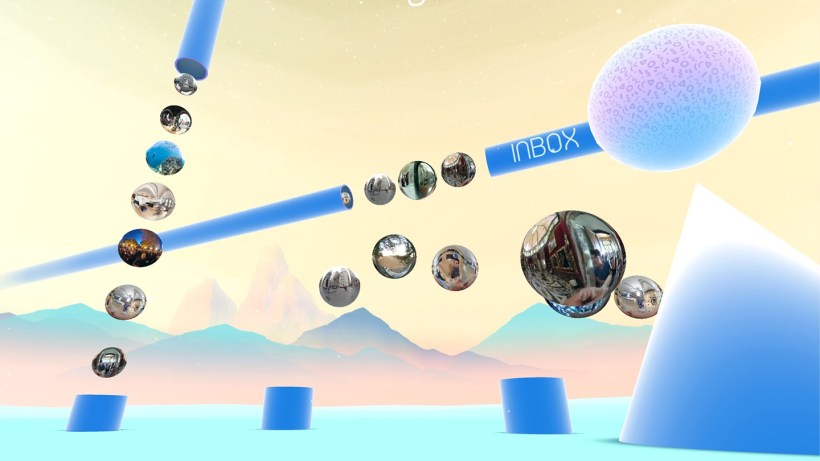

I was part of a small startup incubated by, and later acquired by, Samsung. We published VRB Foto, a 360 photo-sharing app for Gear VR headsets. As a core member of the Unity3D team, I used my mixture of programming experience and design sensibilities to translate the creative team’s vision into a working product.


From the Oculus Store
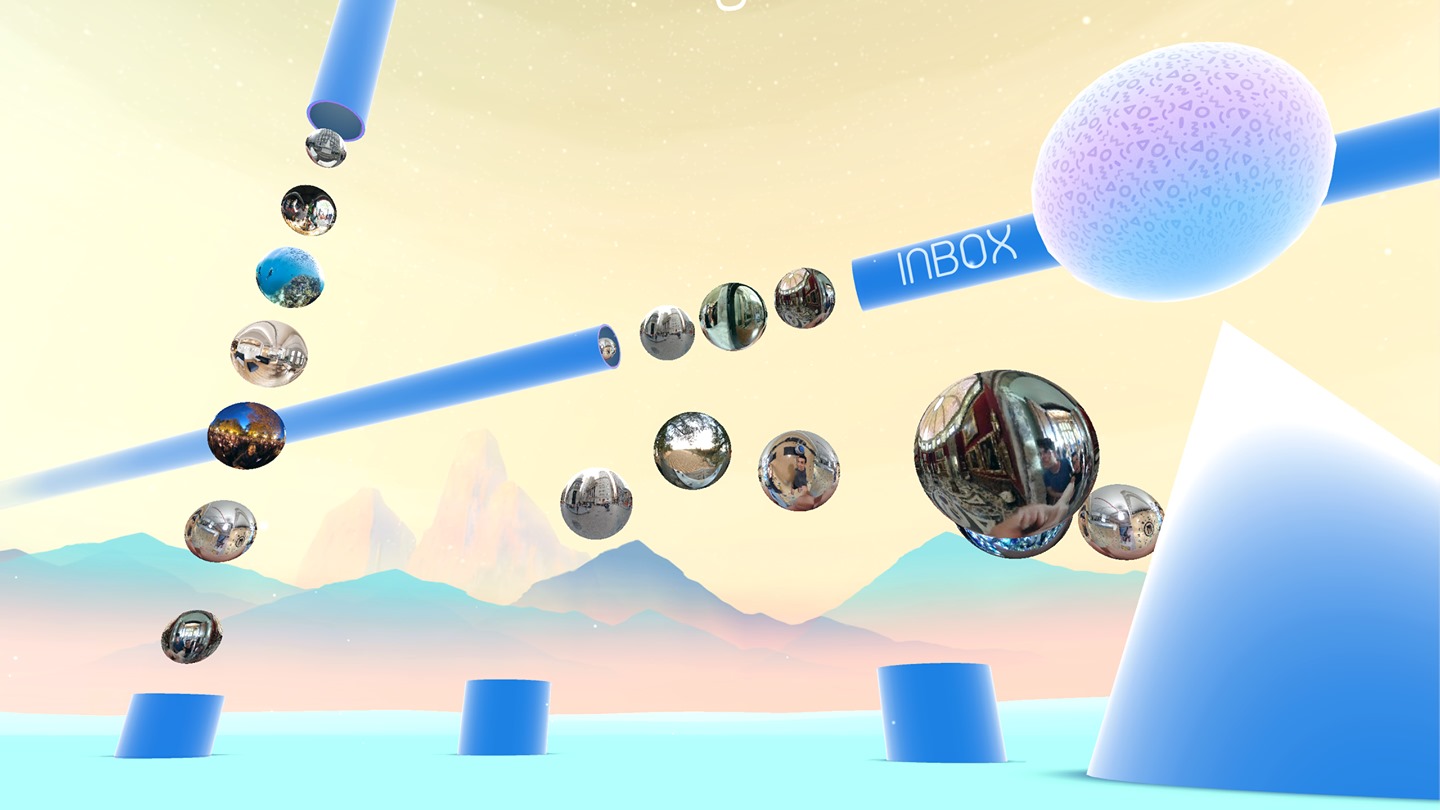
VRB Foto allows you to view, share and augment 360 photos! We automatically find all of the 360 photos on your phone, so you edit and upload completely in the headset. We also offer effects that can dramatically alter the tone of the photo with 3D objects, sound and color changes. When you’re ready to publish, you can post publicly or directly to a friend. Photos are viewable in VR and also on the Web in a fully interactive 360 web viewer.


Designing for Virtual Reality
At the time, developing for virtual reality was new to me, but I quickly mastered the quirks and creative thinking required to develop these applications. Simple user flows, such as how to login or register an account, suddenly spill over with complexity in VR. I now have an intuitive understanding of how interfaces and user flows can be translated to VR, an understanding that can only come from years of experience with the platform.
Keeping Up with Input Devices
VRB Foto predated any handheld controls for the Gear VR, and as such relied on the head-mounted touchpad. Later, I worked with prototype controllers from Oculus and Samsung, integrating them into VRB Foto to test them and provide feedback. Controllers like these are now included with many mobile VR headsets.
Optimize, Optimize, Optimize!
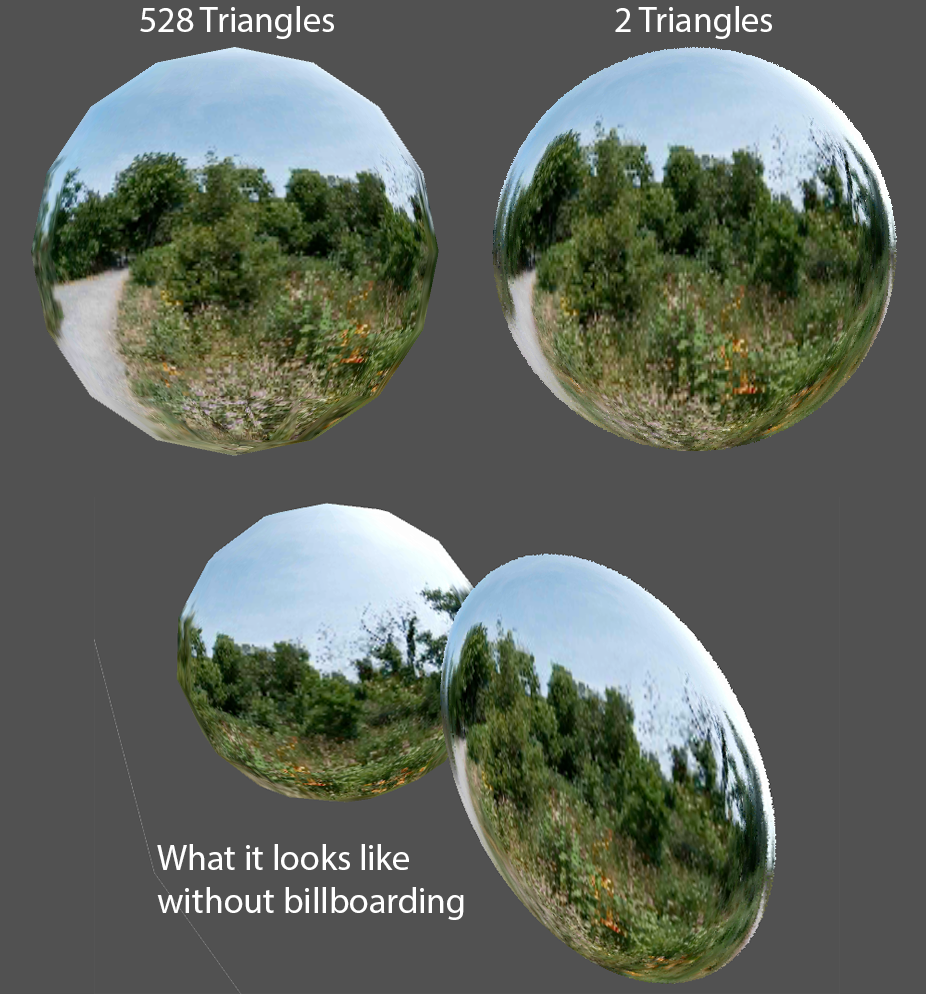
Balancing performance and visual fidelity was a primary focus of my time at VRB Foto. For example, I pushed for optimizing the many “photospheres” visible in our application by replacing them with normal mapped quads. Not only did this reduce the number of triangles on screen, it also allowed us to make our spheres actually look… well, spherical! Examples of the before and after (left and right) are shown below. Note: Billboarding was always on for these objects, and was only turned off for demonstration purposes.
I Can’t Get Motion Sick Anymore
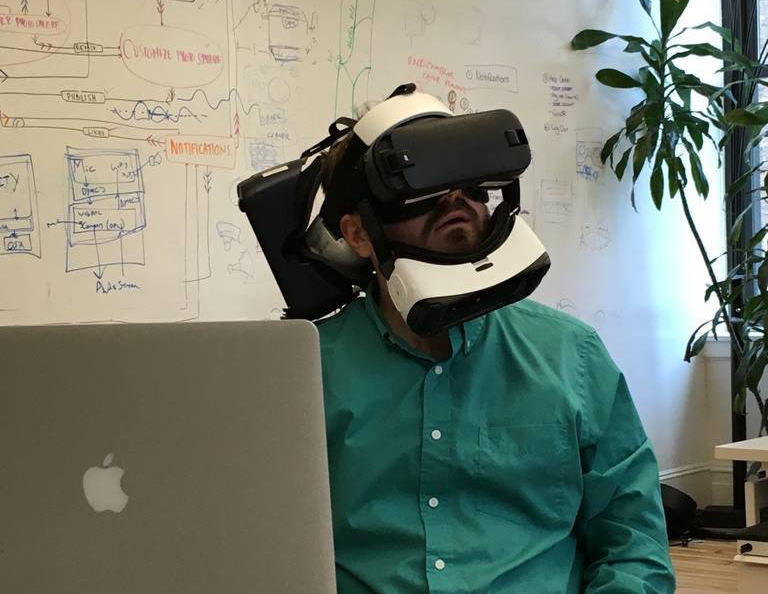
While this prevents me from testing what the average user will find nauseating, I now have such solid VR legs I won’t throw up in your office. I can’t begin to tell you how helpful this is when optimizing a poorly performing VR app.

 Brian Ostrander